Semaglutide vs. Tirzepatide: What Is the Difference?

Learn about GLP-1 weight loss at Vigor Wellness Space in Johns Creek, GA, or view our pricing.
When lifestyle changes alone have not produced meaningful or sustainable weight loss, medical treatment may offer additional support. Semaglutide and tirzepatide are two medications commonly discussed with patients who are exploring medically supervised weight management.
Both medications can help regulate appetite, reduce food intake, and support weight loss when used alongside nutrition, physical activity, and ongoing clinical care. However, they are not identical. They work through different hormonal pathways, have different FDA-approved brand names, and may produce different results from one person to another.
Understanding these differences can help you have a more informed conversation with a qualified healthcare provider about which option may be appropriate for your health, goals, and medical history.
What Is Semaglutide?
Semaglutide is a medication that acts like glucagon-like peptide-1, commonly known as GLP-1. GLP-1 is a naturally occurring hormone involved in appetite, digestion, blood sugar regulation, and insulin release.
By activating GLP-1 receptors, semaglutide may:
- Reduce hunger
- Increase feelings of fullness
- Slow the movement of food through the stomach
- Help regulate blood sugar
- Reduce overall calorie intake
Semaglutide is the active ingredient in several prescription medications. Wegovy is FDA-approved for chronic weight management in eligible patients, while Ozempic is approved for specific uses in adults with type 2 diabetes. The products are not automatically interchangeable, even though they contain the same active ingredient.
The appropriate product and dose depend on the patient’s diagnosis, treatment goals, health history, and prescribing provider.
What Is Tirzepatide?
Tirzepatide is a medication that acts on two hormone receptors rather than one.
It activates receptors for:
- Glucagon-like peptide-1, or GLP-1
- Glucose-dependent insulinotropic polypeptide, or GIP
Both hormones are involved in appetite, digestion, insulin activity, and metabolic regulation. Because tirzepatide acts on both GLP-1 and GIP receptors, it is sometimes described as a dual incretin medication.
Tirzepatide is the active ingredient in Zepbound and Mounjaro. Zepbound is FDA-approved for chronic weight management in eligible patients, while Mounjaro is approved to improve blood sugar control in adults with type 2 diabetes when used with diet and exercise.
As with semaglutide products, the specific medication should be prescribed for an appropriate clinical purpose rather than selected only because of its brand recognition.
The Main Difference Between Semaglutide and Tirzepatide
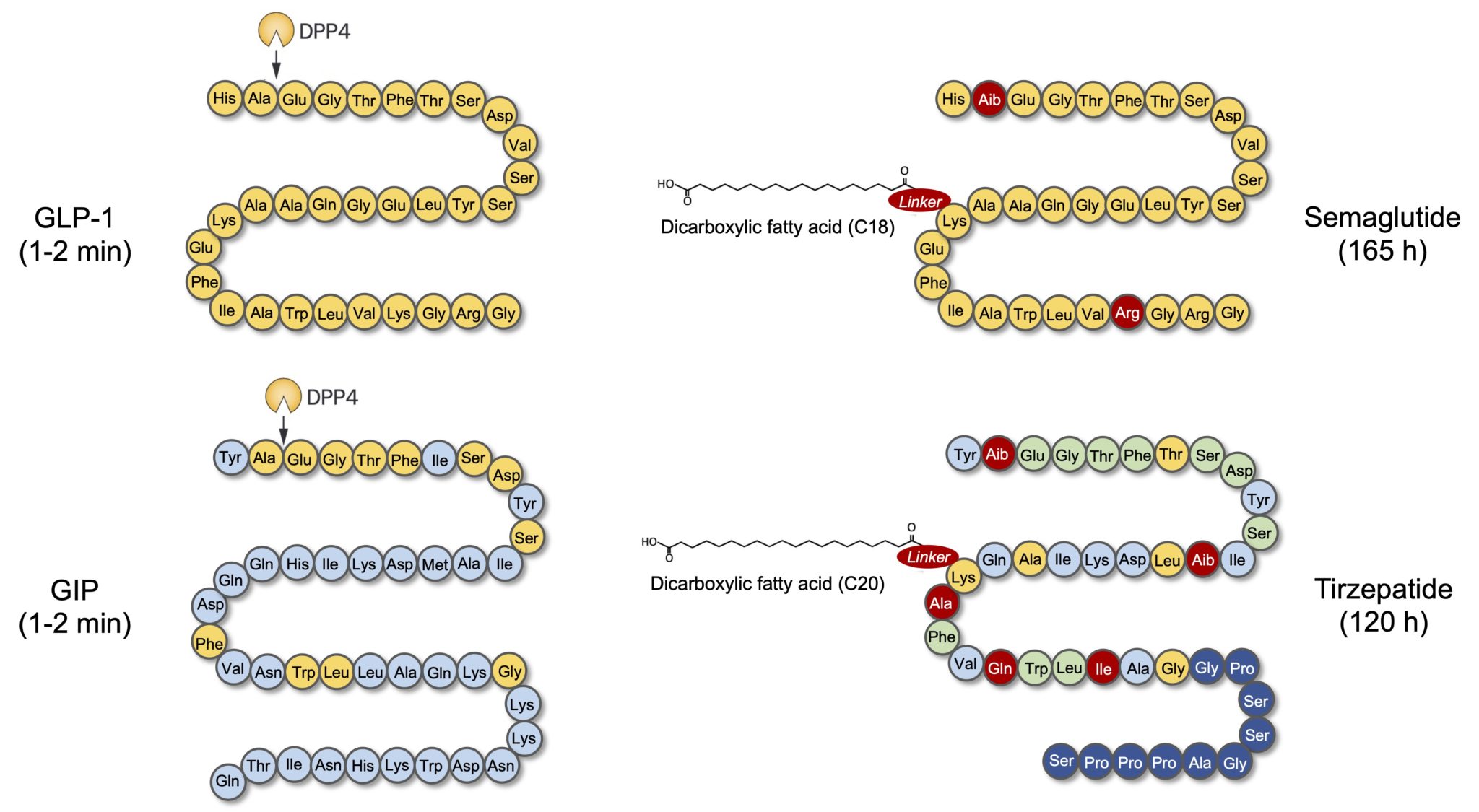
The most important difference is how each medication interacts with the body’s hormone receptors.
Semaglutide activates GLP-1 receptors.
Tirzepatide activates both GLP-1 and GIP receptors.
This difference may affect appetite regulation, blood sugar control, and the amount of weight some patients lose. It does not mean that tirzepatide will automatically be the better treatment for every individual.
Medication selection depends on more than average trial results. Tolerability, medical history, other medications, insurance coverage, treatment response, and personal goals all matter.
How Do These Medications Support Weight Loss?
Semaglutide and tirzepatide do not directly burn body fat. They support weight management primarily by changing appetite and food-related signals.
Many patients find that they:
- Feel full after eating less
- Remain satisfied for longer after meals
- Experience fewer intense cravings
- Think about food less frequently
- Find it easier to follow an appropriate nutrition plan
Because both medications can slow gastric emptying, food may remain in the stomach longer. This can contribute to fullness, but it can also cause digestive side effects.
The medications are most effective when they are part of a structured treatment plan. Patients still need adequate nutrition, hydration, movement, sleep, and habits that protect muscle mass and long-term metabolic health.
Which Medication Produces More Weight Loss?

Clinical studies suggest that tirzepatide may produce greater average weight loss than semaglutide in some populations.
In a head-to-head trial involving adults with obesity but without diabetes, participants receiving tirzepatide lost an average of approximately 20% of their starting body weight over 72 weeks, compared with approximately 14% among participants receiving semaglutide. These were group averages from a controlled trial, not guaranteed individual outcomes.
Other comparative and real-world studies have also associated tirzepatide with greater average weight loss. However, individual responses vary considerably, and study results do not determine which medication a particular patient will tolerate or benefit from most.
Some patients respond very well to semaglutide. Others may respond more strongly to tirzepatide. Some may experience side effects that prevent them from reaching or remaining on higher doses of either medication.
The best treatment is not necessarily the one associated with the highest average weight loss. It is the one that is medically appropriate, tolerable, accessible, and sustainable for the individual patient.
How Are Semaglutide and Tirzepatide Taken?
For weight management, semaglutide and tirzepatide have commonly been administered as subcutaneous injections, meaning the medication is injected into the fatty tissue just beneath the skin.
Treatment usually begins with a low dose. The dose is then increased gradually according to the prescribing plan and the patient’s response.
This gradual process is known as dose escalation or titration. It is intended to help the body adjust and may reduce the severity of gastrointestinal side effects.
Patients should not:
- Increase their dose without medical guidance
- Take doses more frequently than prescribed
- Combine different GLP-1 or incretin medications
- Use someone else’s medication
- Restart a previous dose after a long interruption without speaking to a provider
Following the prescribed schedule is an important part of using these medications safely.
Do They Have Similar Side Effects?
Semaglutide and tirzepatide have many of the same common side effects because both influence GLP-1 pathways and digestive function.
Common effects may include:
- Nausea
- Diarrhea
- Constipation
- Vomiting
- Abdominal discomfort
- Indigestion
- Reduced appetite
- Fatigue
Digestive symptoms are often more noticeable when treatment begins or when the dose increases. They may improve as the body adjusts, but patients should report persistent, severe, or worsening symptoms to their provider.
A slower titration schedule, smaller meals, adequate hydration, and adjustments to food choices may help some patients. The appropriate response depends on the symptoms and should be discussed with the treating clinician.
What Are the More Serious Risks?
Both semaglutide and tirzepatide carry warnings and precautions that should be reviewed before treatment.
Potential concerns can include:
- Pancreatitis
- Gallbladder problems
- Kidney injury related to dehydration
- Severe gastrointestinal reactions
- Low blood sugar, particularly when combined with certain diabetes medications
- Allergic reactions
- Changes in diabetic eye disease among some patients
- Complications related to delayed stomach emptying
Both Wegovy and Zepbound include boxed warnings about thyroid C-cell tumors observed in rodents. It is not known whether these medications cause these tumors in humans. They are contraindicated in patients with a personal or family history of medullary thyroid carcinoma or Multiple Endocrine Neoplasia syndrome type 2.
This is not a complete list of risks. A provider should review the full prescribing information and the patient’s individual history before treatment begins.
Who May Not Be a Good Candidate?
Semaglutide or tirzepatide may not be appropriate for everyone.
Additional caution, evaluation, or an alternative treatment may be needed for people with:
- A personal or family history of medullary thyroid carcinoma
- Multiple Endocrine Neoplasia syndrome type 2
- A history of pancreatitis
- Significant gastrointestinal disease
- Severe gastroparesis or delayed stomach emptying
- Gallbladder disease
- Certain kidney conditions
- Diabetic retinopathy
- A history of severe allergic reactions to the medication
- Pregnancy or plans to become pregnant
- Current use of another GLP-1 or incretin medication
Patients should provide a complete list of prescriptions, over-the-counter medications, and supplements during their consultation.
The provider also needs to know about previous weight-loss medications, diabetes treatment, digestive symptoms, eating disorder history, and any major changes in health.
Can These Medications Cause Low Blood Sugar?
Semaglutide and tirzepatide do not usually cause severe hypoglycemia when used alone in people who are not taking other glucose-lowering medications.
However, the risk can increase when either medication is combined with insulin or certain diabetes medications, such as sulfonylureas.
Symptoms of low blood sugar may include:
- Shaking
- Sweating
- Dizziness
- Confusion
- Weakness
- Irritability
- Rapid heartbeat
Patients receiving diabetes treatment may need medication adjustments and closer glucose monitoring when beginning semaglutide or tirzepatide.
How Quickly Do They Work?
Appetite changes may begin before substantial changes appear on the scale. However, there is no single timeline that applies to every patient.
Weight loss is usually gradual and may be affected by:
- Starting weight
- Medication dose
- Dose tolerance
- Nutrition
- Physical activity
- Sleep
- Stress
- Other medical conditions
- Additional medications
- How consistently treatment is followed
The beginning dose is generally intended to help the body adjust, not to produce the maximum possible effect immediately.
A slower start does not necessarily mean the medication is failing. Providers usually evaluate progress over time rather than judging treatment based on one week or one weigh-in.
Does a Higher Dose Always Produce Better Results?
Not necessarily.
Higher doses may produce stronger appetite effects for some patients, but they can also increase side effects. A patient does not need to reach the maximum available dose for treatment to be successful.
The right dose is the one that provides meaningful benefit while remaining safe and tolerable.
A provider may keep a patient at a lower dose for longer, delay an increase, or reduce the dose if symptoms become difficult to manage. These decisions should be based on the individual response rather than a fixed expectation that everyone must follow the same schedule.
How Do the Medications Affect Muscle Mass?
Weight loss can include both fat and lean tissue. This can happen with medication-assisted weight loss as well as weight loss achieved through diet alone.
Preserving muscle is important because muscle supports:
- Strength
- Mobility
- Metabolic health
- Physical function
- Long-term weight maintenance
- Healthy aging
A medically supervised plan should address more than the number on the scale. Adequate protein, resistance training, appropriate calorie intake, hydration, and regular progress assessments may help protect lean mass.
Rapidly eating as little as possible is not the goal. The goal is to achieve sustainable improvement while supporting overall health.
What Happens if You Stop Taking Semaglutide or Tirzepatide?
Appetite may increase after treatment ends, and some people regain part of the weight they lost.
Obesity is often a chronic condition influenced by biology, environment, behavior, sleep, stress, medications, and other health factors. For this reason, stopping medication does not necessarily mean that the biological drivers of weight gain have disappeared.
Before ending treatment, patients should speak with their provider about:
- Why they are stopping
- Whether the medication should be discontinued or adjusted
- How appetite will be managed
- Which habits need additional support
- Whether another treatment is appropriate
- How progress will be monitored afterward
Long-term planning should begin before the medication is stopped, not after weight regain has already occurred.
Are Compounded Versions the Same as FDA-Approved Products?
Compounded medications are not FDA-approved and do not undergo the same premarket review for safety, effectiveness, quality, and manufacturing consistency as FDA-approved products.
Availability of compounded semaglutide or tirzepatide has changed as medication shortages and federal rules have evolved. Patients should not assume that a compounded product is identical to Wegovy, Ozempic, Zepbound, or Mounjaro.
A patient considering any compounded medication should ask:
- Why a compounded product is being recommended
- Which pharmacy prepares it
- Which form of the active ingredient is used
- How the dose is measured
- What quality controls are followed
- Whether an FDA-approved product is available and appropriate
Medication should only come from a legitimate prescription and appropriately licensed pharmacy.
Semaglutide vs. Tirzepatide: Which One Is Better?
There is no universal answer.
Tirzepatide has produced greater average weight loss in some head-to-head and comparative research. Semaglutide may still be the more appropriate choice for certain patients based on their health history, treatment goals, cardiovascular considerations, medication tolerance, availability, or insurance coverage.
A provider may consider:
- Current weight and body mass index
- Weight-related medical conditions
- Type 2 diabetes or prediabetes
- Cardiovascular history
- Previous weight-loss treatments
- Digestive health
- Current medications
- Pregnancy plans
- Side-effect concerns
- Insurance and cost
- The patient’s ability to follow a long-term treatment plan
Choosing between these medications should be a clinical decision, not a reaction to social media trends or another person’s results.
Why Medical Supervision Matters
Semaglutide and tirzepatide are prescription medications, not simple appetite supplements.
Medical supervision helps ensure that:
- The medication is appropriate for the patient
- Contraindications and interactions are reviewed
- The dose is increased safely
- Side effects are addressed early
- Nutrition remains adequate
- Muscle preservation is considered
- Progress is evaluated realistically
- Treatment changes are made when necessary
Successful medical weight management should support the whole person. That includes energy, strength, laboratory results, daily functioning, emotional well-being, and the ability to maintain healthier routines.
Questions to Ask During Your Consultation

Before beginning semaglutide or tirzepatide, consider asking:
- Which medication may be more appropriate for my health history?
- Am I eligible for medical weight-loss treatment?
- Which product would be prescribed?
- What results are realistic for me?
- How will my dose be increased?
- What should I do if I experience nausea or constipation?
- How will we protect my muscle mass?
- Do any of my current medications need adjustment?
- What laboratory testing or monitoring will I need?
- How long might treatment continue?
- What happens if the medication does not work well for me?
- What is the plan if I eventually stop treatment?
A careful consultation should give you enough information to make a confident, informed decision.
Taking the Next Step
Semaglutide and tirzepatide can both support meaningful weight loss for appropriate patients, but they work differently and should not be selected based only on which medication appears more popular or produces the highest average result.
The right choice depends on your medical history, current medications, metabolic health, side-effect tolerance, goals, and long-term plan.
Vigor Wellness Space provides personalized medical weight-loss care in Johns Creek, Georgia. Treatment begins with an individual evaluation to determine whether medication-assisted weight management is appropriate and which option may best support your needs.
Schedule a consultation with Vigor Wellness Space to discuss semaglutide, tirzepatide, and the next step in your personalized weight-management plan.
This article is for educational purposes only and does not replace medical advice, diagnosis, or treatment. Medication eligibility, dosing, risks, and expected outcomes vary by patient. Do not begin, stop, combine, or change the dose of any prescription medication without guidance from a qualified healthcare provider.
Considering either medication in Johns Creek? Learn about our semaglutide program (from $299/month) and tirzepatide program (from $399/month), or book a free consultation.

Related articles

Weight Loss
Most people notice less hunger within 1–2 weeks on a GLP-1, while weight loss builds over months as the dose is raised. Here is a realistic week-by-week timeline.

Weight Loss
Losing weight can feel frustrating when your efforts are not producing the changes you expected. You may be eating differently, exercising more, or trying [...]